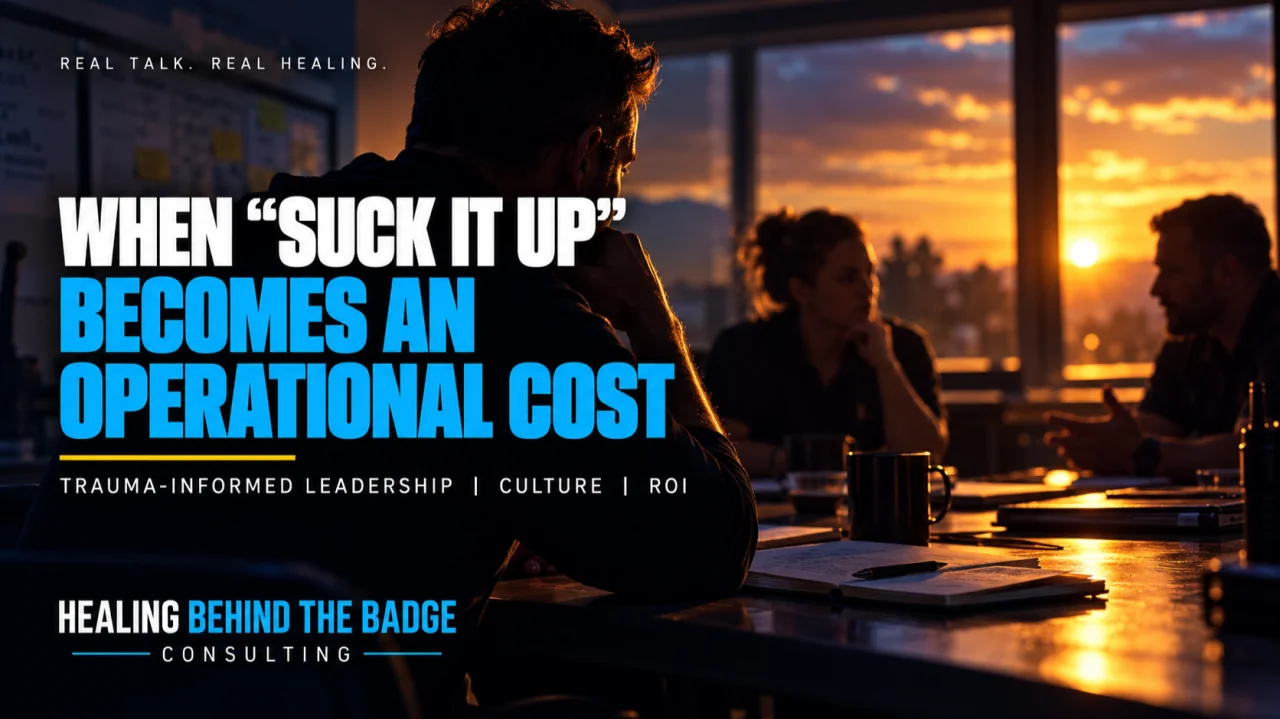
There is a point in many high-pressure workplaces where coping quietly becomes part of the job description.
You finish the shift. You make the next decision. You turn up tomorrow. If someone asks how you are, the answer is usually, “I’m good.”
From the outside, the team appears to be functioning. But leaders may also be seeing experienced people withdraw, more tension between colleagues, mistakes that were once unusual, and staff who seem to have nothing left when they get home.
We often talk about the human cost of that culture. We should. But organisations also need to talk honestly about its operational cost.
A workplace where people are afraid to speak up can lose good staff, valuable experience and trust. It can spend more time filling gaps in the roster while the underlying problems remain. That is why trauma-informed leadership deserves a place in conversations about performance, retention and risk, as well as wellbeing.
The cost of waiting until someone breaks
Australia’s workers’ compensation figures show why psychological injury cannot be treated as a side issue. In Safe Work Australia’s 2025 statistics, mental health conditions accounted for 12% of serious claims in 2023–24. Those claims had a median of 35.7 working weeks lost and $67,400 in compensation paid. These are national figures across industries, not a prediction of what will happen in any one workplace. But they show the scale of the issue. (data.safeworkaustralia.gov.au)
Even those figures do not capture everything a team feels when someone is injured or leaves.
Who covers the shifts? How long does it take a new person to learn the work? What happens to the confidence of colleagues who watched someone struggle without getting support? What knowledge walks out the door with an experienced employee?
For frontline organisations, there can also be a cost to decisions made under pressure when people are exhausted, disconnected or reluctant to raise a concern.
The point is not to put a dollar value on a person’s wellbeing. The point is that caring for people and running an effective organisation are connected.
What trauma-informed leadership looks like in practice
“Trauma-informed” can sound abstract. On the frontline, it needs to show up in ordinary leadership decisions.
It means recognising that exposure to difficult events, sustained pressure and workplace experiences can affect people differently. It means responding to a change in someone’s behaviour with curiosity before judgment. And it means examining the conditions around the person, rather than placing the entire responsibility for coping on them.
That does not require a leader to become a therapist. Leaders should not diagnose staff or press them to disclose private experiences. Their role is to notice, listen, take concerns seriously, address work-related risks where they can, and connect people with appropriate support.
Consider a capable team member who has become short-tempered and withdrawn. A leader can treat that as an attitude problem and move straight to a warning. Or they can still address the behaviour while asking a useful question in private:
“I’ve noticed you don’t seem yourself lately. How are things going?”
One conversation may not reveal the answer. But the way that conversation is handled tells the employee whether it is safe to have another one.
Psychological safety has an operational purpose
A team needs people who will speak up when something is wrong: a near miss, an unsustainable workload, a concern about a colleague, or a decision that needs a second look.
If staff believe speaking up will lead to ridicule, punishment or damage to their career, leaders will hear less of what they need to know. Problems may only become visible once they have grown.
Psychological safety does not mean removing accountability or avoiding difficult conversations. It means people can raise a concern, admit an error or ask for help without being humiliated for doing so. A leader can set a high standard and still respond fairly when someone falls short.
After a difficult incident, for example, an operational review may be necessary. People need to know its purpose, what will happen with the information they share, and where they can get support. A review of decisions and a conversation about wellbeing serve different purposes. Both matter, and staff should be clear about which conversation they are having.
The return on investment is broader than claims
When organisations ask about the return on investment in better leadership, compensation claims are often the first measure mentioned. They are relevant, but they are only one part of the picture.
A stronger culture may also be reflected in:
- Retention: experienced staff choosing to stay, and the knowledge they retain within the team.
- Absence and roster pressure: fewer gaps to cover and less strain passed to colleagues.
- Early reporting: concerns being raised while there is still an opportunity to respond.
- Team performance: clearer communication, better learning from mistakes and more confidence in leaders.
- Return to work: people receiving practical support to remain connected or return sustainably after an injury.
None of these outcomes should be promised on the strength of a single workshop. Claims trends, in particular, can be affected by many factors. An initial rise in reporting might even mean people finally trust the organisation enough to speak.
The useful question is: What is this organisation spending, losing or struggling to deliver now, and what would meaningful improvement look like over time?
That might involve looking at staff feedback, turnover, absence, incident reporting, workload, return-to-work experiences and the reasons people give for leaving. It also means listening to the people doing the work. A spreadsheet can show a pattern; staff can often explain what is behind it.
Individual resilience cannot fix every workplace problem
I believe in practical tools. Physical training and movement have played an important role in my own recovery. So have connection, honest conversations and learning to recognise when I need to reset.
But no amount of breathing exercises will make an unsafe workload sustainable. A wellbeing session cannot repair a culture in which asking for help carries a penalty.
Safe Work Australia identifies psychosocial hazards as aspects of work that can create stress and, when exposure is frequent, prolonged or intense, cause psychological or physical harm. That makes the design and management of work part of the conversation, alongside personal support. (safeworkaustralia.gov.au)
Leaders can start with questions that are direct enough to produce useful answers:
- Where are people carrying pressure that we have come to treat as normal?
- What happens here when someone reports a mistake or says they are struggling?
- Are our supervisors equipped to have an early conversation?
- Do staff know where to get support, and do they trust the process?
- What have people told us needs to change that we have not yet acted on?
The answers may be uncomfortable. They are also far more useful than another slogan about resilience.
From personal experience to better leadership
I have served in policing for 27 years and I am still serving. I have also experienced psychological injury and had to prioritise my recovery and mental health.
I know what it is to keep functioning while something underneath has changed. I know that support is more than a link on an intranet page. It is shaped by how people respond when you first say, “I’m not okay.”
Those experiences helped shape RESPOND, the framework I use in my work: Recognise, Exhale, Shift, Purpose, Open Up, Navigate and Develop Others. It is a practical way to notice what is happening, create space to respond and take the next useful step. For leaders, that final part matters: what we learn should change how we look after the people who come after us.
Trauma-informed leadership is not a claim that we can prevent every injury or have the perfect conversation every time. It is a commitment to lead with greater awareness, respond earlier and take seriously the conditions in which people work.
Where an organisation can begin
You do not need to announce a sweeping culture transformation on Monday morning. Start with what your people are already showing you.
Listen for the concerns that keep recurring. Look at where experienced staff are leaving. Ask supervisors which conversations they feel least prepared to have. Check whether staff understand what happens after they raise a concern. Then act on something visible and tell them what you have changed.
For organisations ready to go further, this work can include leadership development, practical workshops and a closer look at the everyday practices that shape trust. The aim is to help leaders handle difficult moments well and build conditions in which people can do demanding work without being expected to carry its full weight alone.
A “suck it up” culture can appear tough for a long time. The real test is what happens when one of your best people can no longer keep saying they’re fine.
If you lead a team, ask yourself this week: would your people tell you early, or would you only find out once they reached breaking point?